

India's Russian Crude Imports Surge 90% in March Amid Oil Market Changes
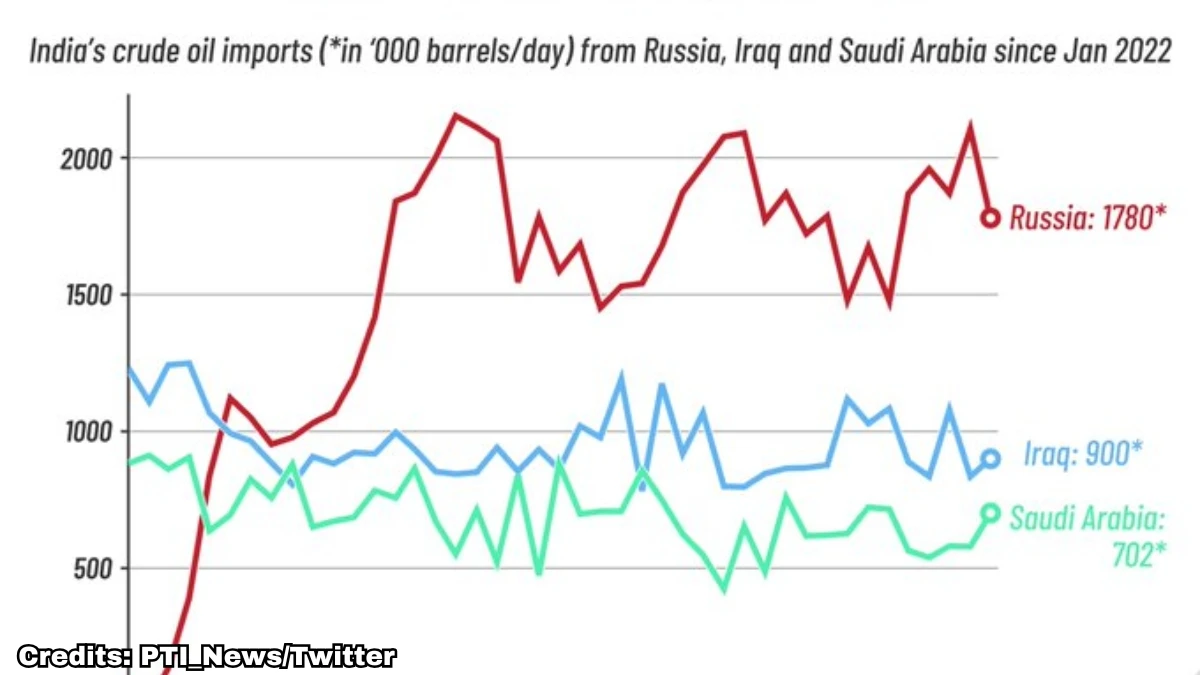
India's imports of Russian crude oil surged by 90% in March, a significant increase attributed to shifts in the global oil market following the Hormuz block incident. This rise underscores India's growing reliance on Russian crude amidst ongoing geopolitical tensions and changing energy dynamics.
The Hormuz block, a strategic chokepoint for global oil shipments, has faced increased scrutiny and disruption, prompting countries to reassess their energy sourcing strategies. Consequently, India has turned to Russia, which has become a key supplier of crude oil in recent months. The increase in imports is part of a broader trend where Indian refiners are capitalizing on discounted Russian oil, made more accessible due to Western sanctions imposed on Russia following its invasion of Ukraine.
In March, India imported approximately 1.6 million barrels per day of Russian crude, marking a significant shift in its oil procurement strategy. This increase reflects India's efforts to secure energy supplies at competitive prices and indicates a broader realignment of global oil trade routes. The country has emerged as one of the largest buyers of Russian oil, taking advantage of price discounts that have made Russian crude more attractive compared to other sources.
The implications of this shift are substantial for both India and the global oil market. For India, securing a stable and affordable supply of crude oil is critical for its economic growth, especially as it seeks to recover from the impacts of the COVID-19 pandemic. However, reliance on Russian oil raises questions about India's energy security and its diplomatic relations with Western nations, which have been critical of Russia's actions.
From a global perspective, the surge in Indian imports of Russian crude oil reflects the changing landscape of energy supply and demand. As countries navigate the complexities of geopolitical tensions and economic sanctions, traditional trade relationships are being redefined. The increase in Russian oil exports to India may prompt other nations to reconsider their energy strategies, potentially leading to a more fragmented global oil market.
In the Gulf region, this development could have significant ramifications. Gulf countries, historically major players in the global oil market, may need to adapt to shifting dynamics as emerging economies like India seek alternative sources of crude oil. Increased competition for market share could lead to changes in pricing strategies and production levels among Gulf oil producers.
As India continues to strengthen its ties with Russia, the long-term impact on its energy policy and international relations will be closely monitored. The evolving situation highlights the need for countries in the Gulf and beyond to remain agile in their energy strategies, ensuring they can respond effectively to the rapidly changing global landscape.
النسخة العربية
ارتفاع واردات الهند من النفط الروسي بنسبة 90% في مارس وسط تغييرات سوق النفط
شهدت واردات الهند من النفط الروسي قفزة هائلة بنسبة 90% في شهر مارس، نتيجة للتغيرات الكبيرة في سوق النفط العالمي بعد إغلاق مضيق هرمز، مما يعكس تحولاً استراتيجياً في مصادر الطاقة الهندية.
يعتبر مضيق هرمز أحد أهم الممرات البحرية لنقل النفط، حيث يمر عبره جزء كبير من صادرات النفط العالمية. ومع إغلاق هذا الممر الحيوي، اضطرت الدول المستوردة للنفط إلى البحث عن بدائل لتلبية احتياجاتها من الطاقة. الهند، ثالث أكبر مستهلك للنفط في العالم، وجدت في النفط الروسي خياراً استراتيجياً لتعويض النقص المحتمل في الإمدادات. تأتي هذه الخطوة في إطار سعي الهند لتنويع مصادرها من الطاقة وتقليل الاعتماد على النفط القادم من الخليج العربي، خاصة في ظل التوترات الجيوسياسية التي قد تؤثر على استقرار الإمدادات.
وفقاً للتقارير، ارتفعت واردات الهند من النفط الروسي إلى مستويات غير مسبوقة في مارس، مما يعكس تحولاً مهماً في استراتيجيات الطاقة الهندية. في الوقت الذي كانت فيه الهند تعتمد بشكل كبير على النفط القادم من دول الخليج، تشير هذه الزيادة في الواردات الروسية إلى إعادة تشكيل لسلة إمدادات النفط الهندية. يعكس هذا التحول أيضاً التغيرات في ديناميات السوق العالمي، حيث تسعى الدول إلى تأمين إمداداتها من الطاقة في ظل التحديات الجيوسياسية والاقتصادية المتزايدة.
Source tweet
India's imports of Russian crude oil skyrocketed by 90% in March, driven by shifts in the oil market following the Hormuz block. This significant increase reflects changing dynamics in global energy supply.
More Stories
 Palestine
Russian Foreign Minister Says US Recognises Israel's Golan Heights Claim
 BREAKING
Iran Closes Strait of Hormuz 2026: Oil Price Surge and Qatar LNG Disruption
 Iran
IranFAO Warns Global Food Prices Could Surge if Hormuz Blocks Fertilizer Ships
 BREAKING
Iran Calls U.S. Blockade of Strait of Hormuz Piracy; Oil Prices Surge 8%
 Iran
Iran